


Meet professional trainers
Our speakers

Vicente Traver
PhD in Telecommunications Engineering in Valencia Polytechnic University, his research works and technological transference focuses on telemedicine and e-health. Director of SABIEN group (Technological Innovation for Health and Well-being) in ITACA research institute. Professor in Valencia Polytechnic University, he has lectured on ICTs and health subjects since 2001.
He is a member of the Academic Commission of the University Masters of Biomedical Engineering, which he also lectures for. He has participated in more than thirty European and national RD+I project and fifteen research agreements with companies in the telemedicine and e-health sector. Author of more than 50 research articles published in international journals and keynote speaker in more than a hundred national and international conferences. An expert in FENIN for the Study of Future Technology for e-Health, he is also founder of various companies in the Health and Well-being sector. He acts as coordinator of the research micro-cluster ‘Innovative Technologies for Health and Active and Healthy Aging’.
Editor of the book ‘The e-patient and social media’ endorsed by the Vodafone Foundation, he has also edited various monographics on health and social media for The Medical Journal. Dr Traver Salcedo organised the IEEE Congress for Biomedical Health Informatics in 2014 along with many other congresses and international workshops
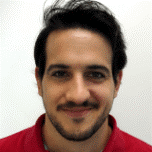
Antonio Martínez-Millana
Bachelor in Telecommunications Engineering (2009), Master in Biomedical Engineering (2013) and Ph.D. in Technologies for Health and Wellbeing (2017) by the Universitat Politècnica de València. Senior researcher in ITACA institute of the Universitat Politècnica de València in Digital Health and Digital Systems, and lecturer in the Department of Electronic Engineering in Biomedical Systems for Disease Monitoring since 2016. Antonio has supervised and co-supervised more than 15 Bachelor Thesis and Master Thesis from Telecommunication, Computer Science and Biomedical Engineering degrees.
More than 10 years of expertise in private companies and public research institutes in several international projects for eHealth and Social and Demographic challenges. The research focus is in mobile health and use of wearables in chronic conditions, integrating technologies for data management, data processing and data visualization.
The track record includes more than 10 EU-funded projects, 3 national grants and several publications in high impact factor journals and international conferences. Currently Antonio has more than 23 publications in indexed journals (PLoS ONE, JAMIA, JMIR, Journal of Medical Systems, Sensors, etc) and 40+ conference publications in IEEE EMBS, BMP and IEEE CBMS, among others.
Antonio is active reviewer of EU project proposals in HorizonEurope, IMI2, Eureka and national project applications for research funds (Republic of Serbia and Spain).

Enrique Bernal Delgado
Enrique Bernal-Delgado MD PhD is also Master in Public Health and Master in Health Economics. After a period as Visiting Scholar at The Dartmouth Institute (Dartmouth Medical School, NH, USA), he founded the Data Sciences for Health Services and Policy research group at the Institute for Health Sciences in Aragon (IACS) where currently holds the position of senior scientist
His research areas are a) the study of unwarranted variations in health systems performance (i.e., the analysis of equity, utilization, quality and safety, and effectiveness and efficiency) included the policy analysis of those health systems; b) the comparative effectiveness of complex interventions delivered to chronic and fragile populations; and, c) the development of methodology for the reuse of massive real world data.
Main translation into policy activities are the systematic discovery and publication of the Atlas of Variations in Healthcare is Spain (www.atlasvpm.org); and, his contribution in the development of the European Health Research and Innovation Cloud (https://healthycloud.eu) and to the European Health Data Space (https://tehdas.eu) , both meant the systematic reuse of health data for research, regulation and policy making.

Carlos Fernández-Llatas
Dr. Carlos Fernández-Llatas is Deputy Director at SABIEN Group at ITACA institute at Universitat Politècnica de València (Spain), Afiliated Researcher at Karolinska Institutet (Sweden) and Permanent Researcher at the joint research unit in ICT applied to Reengineering socio-sanitary process at Hospital La Fe of Valencia. He received the PhD degree in Computer Science in the Pattern Recognition and Artificial Intelligence Program of that university. He is member of the IEEE CIS Task Force on Process Mining. He participated in more than 30 projects through IV, V VI and VII European Framework program, H2020 program and Spanish Government funded projects.
He has published more than 100 scientific papers. He has been member of the Organizing Committee in more that 10 international conferences and member of the Scientific Committee in more than 30. He is reviewer in several Indexed journals in Bioengineering and Medical Informatics. His research is mainly focused in the use and promotion of Process Mining technologies as well as Process Management, representation and execution techniques for their application in health and human behaviour modelling.

Georgi Chaltikyan
Professor and Head of Digital Health | Deggendorf Institute of Technology | German
Georgi Chaltikyan, M.D., Ph.D., is a Professor of Digital Health, Global and International Health Care at European Campus Rottal-Inn (ECRI), a branch of Deggendorf Institute of Technology (DIT-ECRI) in Bavaria, Germany, and Founding President of Armenian Association of Digital Health (AADH).
A graduate of the Yerevan State Medical University in Armenia, he has been trained as a general surgeon and spent about 20 years in clinical practice in general and laparoscopic surgery. He has extensive experience in healthcare education, research, and management. From 2001 to 2009 he served as an Associate Professor of Surgery at Yerevan State Medical University. In 2009-2010 he was a Fulbright Visiting Scholar at Keck School of Medicine, the University of Southern California in Los Angeles, USA. From 2010 to 2015 he worked in private surgical practice at a large multi-profile hospital. He has more than 12 years of work experience in the field of Digital Health. As the founding president of the NGO Armenian Association of Digital Health, he has been instrumental in the design and implementation of a number of successful Digital Health projects with international participation.
Prof. Chaltikyan joined the faculty at ECRI at its launch in 2015; he is the program head of Master of Digital Health (MDH) and is responsible for other study courses in healthcare and Digital Health. He also leads international collaborative projects and programs, such as DIT-ECRI’s institutional membership in and partnership with such global organizations as HIMSS. He has publications on different aspects of Digital Health, is involved in several research and development projects in the field, and is a keynote speaker at international conferences. His main research focus is on Global Digital Health and Digital Health Education. Since 2019 he is a member of the WHO Digital Health Roster of Experts. He is a co-founder and head of the large-scale Armenian Digital Health Initiative.

Rocío del Amor
Universitat Politècnica de València | Institute for Research and Innovation in Bioengineering (i3B)
Rocío holds a Bachelor’s degree in Biomedical Engineering (2019), a Master’s degree in Biomedical Engineering (2020) and a PhD in Health and Wellness Technologies (2023) from the Universitat Politècnica de València.
She is currently working as a senior researcher at the CVBLAB of the Universitat Politècnica de València and is specialised in the development of cutting-edge systems that leverage artificial intelligence in various sectors, such as healthcare, environmental sustainability and industrial applications. In addition, Rocío is co-founder of Artikode Intelligence, a spin-off created in 2023, dedicated to the deployment of advanced artificial intelligence solutions.
Rocío also contributes as a Collaborating Professor in the Department of Telecommunications and Applied Statistics. Over the years, Rocío has demonstrated a commitment to mentoring and has supervised or co-supervised more than 10 bachelor and master theses in Telecommunications and Biomedical Engineering.
Rocío’s research focuses on innovative artificial intelligence techniques, from supervised and semi-supervised learning to contrastive learning, with special emphasis on ensuring the interpretability of these systems. In particular, Rocío has contributed to 22 publications in high impact factor journals and has presented research results at 19 national and international conferences.

Luis Marco Ruiz
Luis Marco Ruiz, PhD is a seasoned data engineer and senior researcher with extensive expertise in health data interoperability and biomedical informatics. He holds a PhD from the Norwegian Centre for E‑health Research and an MSc in Data Analysis Engineering (Process Improvement & Decision Making) and a BSc in Computer Science from Universitat Politècnica de València.
Since 2013, Luis has been a pivotal member of the Norwegian Centre for E‑health Research, where he focuses on harmonizing health information systems and clinical decision support architectures. His advisory contributions to the Norwegian Ministry of Health and his collaboration with the HiGHmed consortium in Germany highlight his leadership in promoting clinical information standards and semantic interoperability across international health networks.
His early experience includes roles in the UK (BAE Systems/Detica) and Spain (Optimiva, Ibime Research Group), where he built large-scale e‑health platforms—such as the EHR and LinkEHR system for the Valencian Health Agency.
Currently, he works as a Technical Consultant at Vitagroup AG and as a Senior Scientist on the M3AD Study at Columbia University, focusing on early Alzheimer’s detection from EHR data
Luis Marco Ruiz has published widely (66 publications, 18 k reads, 874 citations), recently producing influential work on federated EHRs using blockchain (2024), sustainable learning healthcare systems (2024), and transformer-based deep phenotyping in radiology (2025)
His participation as a speaker at DigiHealthDay 2025 and his active role in community building—like presenting digital health insights in Moldova for WHO/European partners—underscore his ongoing engagement in shaping global digital health ecosystems
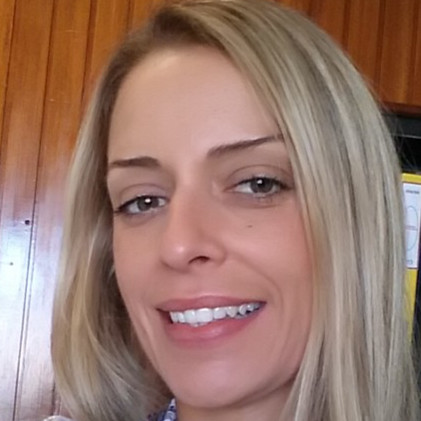
Catia Sousa de Pinto
Since 2018, she has been part of the Advanced Analytics and Intelligence unit at SPMS, EPE, where she strategically leads initiatives focused on the secondary use of real-world data and applied research projects involving artificial intelligence in Portugal’s National Health Service. In her current role as Global Digital Health and Head of International Affairs at SPMS, she spearheads Portugal’s engagement in high-level international forums. In December 2023, she and SPMS were elected Vice-Chair of the Global Digital Health Partnership (GDHP), strengthening Portugal’s global position in digital health.
In February 2025, she was appointed rapporteur for the European Health Data Space (EHDS2) Community of Practice, helping to shape strategies to promote the secondary use of health data across Europe. Among her recent recognitions, she received the 2024 HIMSS Policy Influencer Award—becoming the first Portuguese professional to earn this honor—thanks to public voting, acknowledging her significant impact on global digital health policy transformation.
She has represented Portugal at the G20 Health Summit in Brazil 2024, contributing to discussions on telehealth and health equity, and also participated in the World Health Summit 2024 in Berlin, where she engaged in debates on AI and public-private collaboration.
Her career reflects a unique blend of clinical and public health expertise with strategic leadership in international digital health initiatives, advanced analytics, and artificial intelligence. As the head of Global Digital Health at SPMS, she drives forward initiatives that connect clinical improvement, research, and health policy through the transformative power of data and technology.

Jan-Paul Leuteritz
Researcher at Fraunhofer-Institute for Industrial Engineering (Fraunhofer IAO)
Usability-Professional / UX researcher with strong interests in research methods and Human Resources.
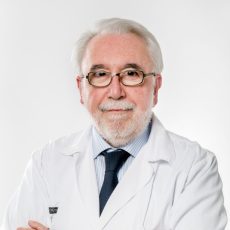
Josep Redón
Professor of Medicine at the University of Valencia Researcher Emeritus, INCLIVA Research Institute, University of Valencia.
Graduated in Medicine and PhD in the Medical School of the University of Valencia (1968-1974). Training in Internal Medicine and Fellowship in Nephrology and Hypertension by the Northwestern University, Chicago. Scientific Director of the Research Institute INCLIVA from 2009 to 2017. President of the European Society of Hypertension (2011-2013). Associate Editor of Journal Hypertension. Awarded with the title of Doctor Honoris Causa by the University of Carol Davila, Bucharest and the Folkow Award in Research of the ESH.

Carolina Abril Tormo
eHealth Consultant
IT Manager in Health Information Systems with implementation of SNOMED CT and structuring of biomedical databases using interoperability standards.

Ana Delgado
Head of Clinical Information Systems Area. General Subdirectorate of Health Information. General Secretariat of Digital Health Information and Innovation of the SNS. Ministry of Health.

Ryan Dos Santos
Technical Officer – Digital Health at World Health Organization
Worked for many years leading Information Technology management in some of the larger companies in Guyana, South America, where I have spearheaded implementations of complex IT systems. Subsequently joined PAHO/WHO in the Americas in 2008, first in IT, then increasingly in Digital Health and health systems development at the county level, including digital health strategy development and platform implementations. Background in computer science and eHealth management.
Expert in Digital Health development as well as Systems Analysis and Design, and Information and project management
María Eugenia Gas López
Maria-Eugenia Gas López graduated in Biochemistry and obtained her PhD in Genetics from the University of Valencia in 1998 and 2007, respectively. She has developed her research activity in research groups of international and national prestige, such as the Institute of Genetics and Molecular and Cellular Biology (France), the Institute of Biotechnology of the University of Helsinki (Finland) and the Biomedical Research Park of Barcelona (Pompeu Fabra University). She currently works at the Big Data IA and Biostatistics Platform led by Dr. Valdivieso-Martínez where she works as a researcher and manager of several national and European e-Health projects.
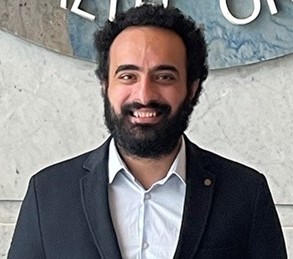
Keyrellous Adib
Keyrellous Adib, a technical officer responsible for data science and digital health at the Data and Digital Health team (DDH) in the Division of Country Health Policies and Systems (CPS) at WHO regional office for Europe. His current role involves providing technical support to 53 Member States in the area of data analytics and digitization of health information systems.

Emilo Vivancos
Responsible for the Autonomous Office for the Application of Artificial Intelligence in Health – Conselleria de Sanitat – Generalitat Valenciana
Emilio Pedro Vivancos Rubio is an engineer and PhD in Computer Science from the Universitat Politècnica de València (UPV), where he is also a full professor since 1992 in the Department of Computer Systems and Computing. His career combines more than three decades in university teaching with an intense research activity in the field of artificial intelligence, highlighting his participation in more than 25 national and international projects and the direction of numerous end-of-degree, master and doctoral theses.
Since 2019 he is part of the Valencian Research Institute for Artificial Intelligence (VRAIN), consolidating his role as a reference in the application of AI to real problems. In October 2024 he was appointed head of the Oficina Autonòmica per a l’Aplicació de la Intel-ligència Artificial en la Salut de la Conselleria de Sanitat de la Generalitat Valenciana, a strategic unit created to promote the agile, ethical and effective incorporation of AI in public health, with impact on prevention, diagnosis, treatment and research.
Vivancos has received several awards, such as the award for the best PhD student in computer science at the UPV and mentions of teaching quality. In recent months he has led pioneering initiatives to introduce AI-based solutions in hospitals in the Valencian Community, such as the Departments of Health of La Ribera and Xàtiva-Ontinyent, in collaboration with Fisabio and other actors.